2026-08-14 · Tom Reynolds
How To Flush Sediment From Your Water Heater Tank
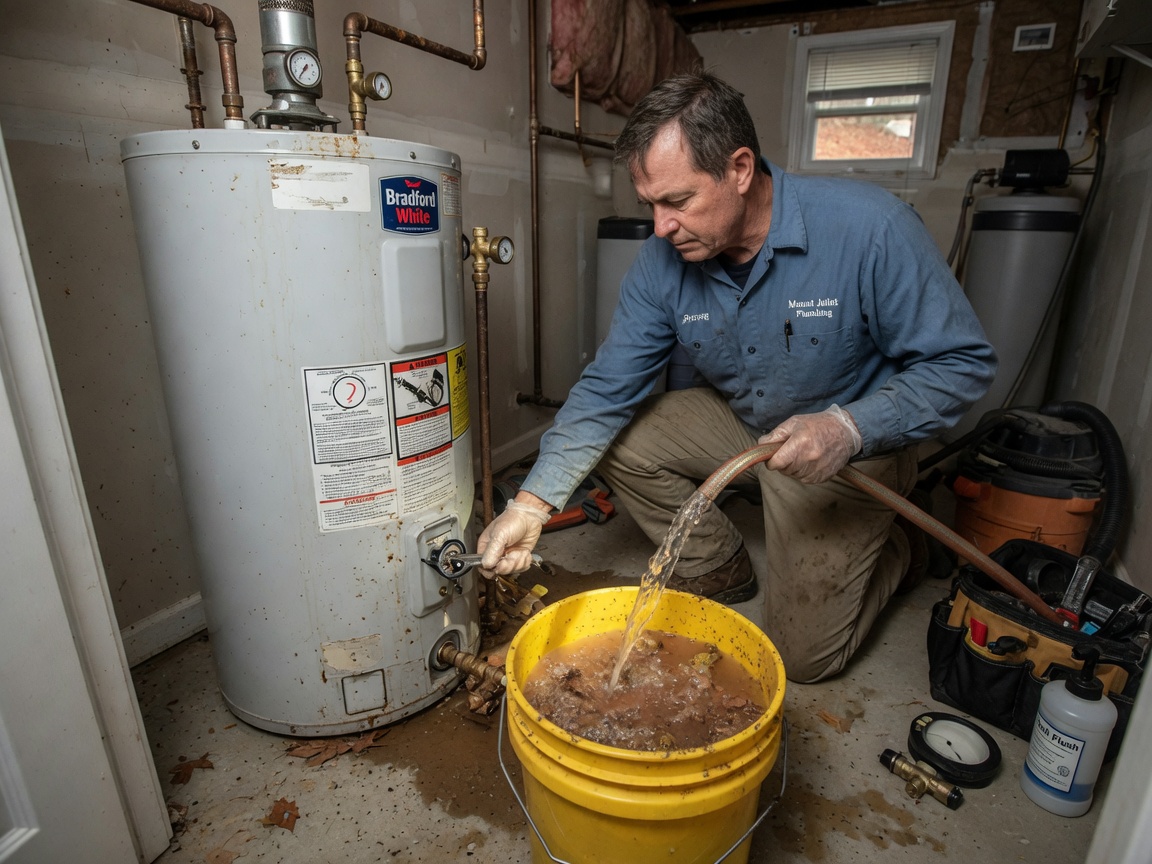
Flushing sediment from your water heater tank takes 30 to 60 minutes and restores flow while cutting energy use by 10 to 20 percent when done every 6 to 12 months. In Mount Juliet’s humid subtropical climate, hot summers accelerate mineral settling, so regular flushing protects both gas and electric models common in Providence and Beckwith neighborhoods.
Understanding Sediment Buildup in Local Tanks
Hard water in Wilson County carries calcium and magnesium that settle at the bottom of 40- to 80-gallon tanks. Over time the layer traps heat, raises operating costs, and can cause rumbling or popping sounds. Homes near Providence Marketplace or Charlie Daniels Park often see faster buildup because of higher summer water temperatures. Left alone, sediment shortens the typical 8 to 12 year lifespan and may lead to leaks that require water heater repair. Monitoring your unit’s age and listening for new noises helps catch the issue before efficiency drops further.
Preparing to Flush Your Tank
Turn off the power or gas at the unit and shut the cold-water inlet valve. Attach a garden hose to the drain valve and run it to a safe outdoor spot or floor drain. Place a bucket under the temperature-pressure relief valve in case it drips. Wear gloves and safety glasses, and keep a wrench handy for stubborn valves. If your tank sits in a tight utility closet common in Beckwith Crossing homes, clear space first so you can work without strain. These steps prevent scalding water or electrical hazards during the process.
Step-by-Step Flushing Process
Open a hot-water faucet on the second floor to relieve pressure, then open the drain valve slowly. Let water run until it flows clear, which usually takes 10 to 20 minutes for a 50-gallon tank. Close the drain, refill the tank with the inlet valve open, and bleed air from all faucets before restoring power or gas. Repeat the drain-and-refill cycle once more if the water still looks cloudy. After the second flush, check for leaks at every connection. This sequence removes most loose sediment without damaging the glass lining or anode rod.
How Often to Flush in Mount Juliet’s Climate
Perform a flush twice a year in our hot summers and once after mild winters when temperature swings stir up settled minerals. Track the date on your calendar or set a reminder tied to daylight-saving time changes. Homes in Providence with larger families or hard-water reports may need three flushes annually. If you notice reduced hot-water volume or higher utility bills, move the schedule forward rather than waiting for the full interval. Consistent timing keeps heating elements or burners clear and supports the 8 to 12 year service life expected from quality tanks.
When Professional Help Makes Sense
If the drain valve is stuck, water stays discolored after two cycles, or you smell gas, stop and call a technician. A water heater flush service brings the right pumps and disposal equipment for stubborn scale. Residents who prefer not to handle gas lines or electrical connections can schedule the same 30- to 60-minute visit during our Mon–Fri 8am–6pm or Sat 9am–2pm hours. For seasonal issues that often appear alongside sediment problems, see our guide on winter water heater issues common in Mount Juliet homes. When flushing no longer restores performance, review local factors that influence water heater replacement in Mount Juliet before the next heating season.